
12 Best Odoo Alternatives in 2026
- Why Teams Switch From Odoo
- Our 12-Point Total Cost Analysis
- 1. Agiled: Best All-in-One Odoo Alternative for Service Businesses
- 2. Zoho One: Best App Ecosystem Alternative
- 3. SAP Business One: Best for Manufacturing SMBs
- 4. ERPNext: Best Free Open-Source Alternative
- 5. NetSuite: Best for Mid-Market Enterprise
- 6. Microsoft Dynamics 365 Business Central: Best for Microsoft Teams
- 7. Freshworks: Best for Customer-Facing Sales Teams
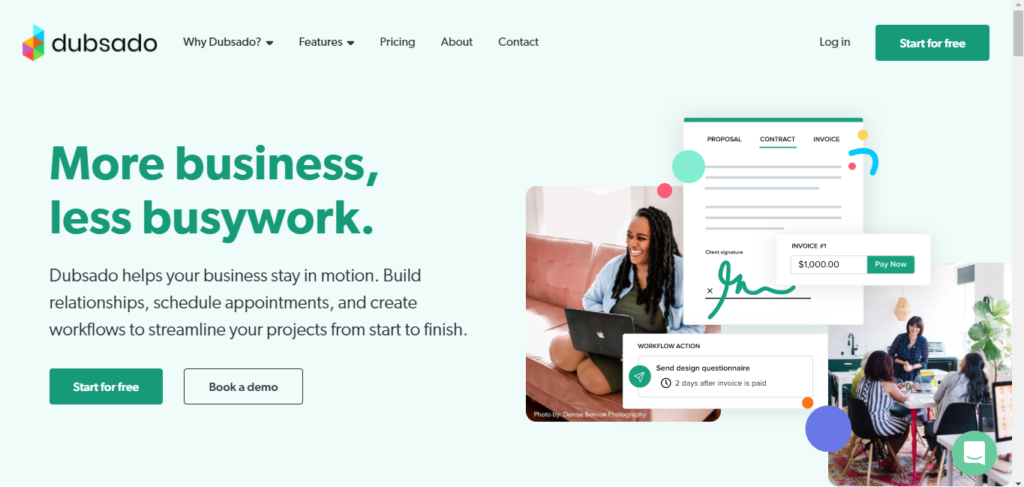
- 8. SuiteDash: Best Fully Branded Client Platform
- 9. Bitrix24: Best for Team Collaboration and CRM
- 10. Scoro: Best for Professional Services Firms
- 11. Flowlu: Best for Budget-Conscious Small Teams
- 12. QuickBooks Online: Best for Accounting-First Businesses
- How These 12 Platforms Compare on Core Features
- What a 10-Person and 30-Person Team Actually Pays
- When Odoo Is Still the Right Choice
- Frequently Asked Questions
Odoo Standard costs $31/user/month (US pricing); Custom costs $47/user/month. But license fees are just the start: implementation runs $5,000-$25,000, and most teams need a consultant. A 10-person team's first-year total reaches $14,000-$35,000. Top alternatives: Agiled (from $24/mo billed annually, no implementation cost), Zoho One ($37/employee/month), ERPNext (free self-hosted).
Odoo is an open-source ERP with 82+ integrated apps covering CRM, accounting, inventory, manufacturing, HR, eCommerce, and point of sale. It is one of the most comprehensive business platforms available, with a One App Free plan and paid plans starting at $31/user/month (US pricing) .
The trade-off is total cost of ownership. Odoo's license fee is the smallest line item. Implementation typically costs $5,000-$25,000 for a mid-complexity setup, most businesses need an Odoo partner or consultant to configure it, and the One App Free plan triggers full per-user pricing the moment you add a second app. For service businesses that need CRM, invoicing, project management, and client portals but not inventory, manufacturing, or warehouse modules, Odoo delivers far more complexity than value. These 12 alternatives are worth evaluating.
Quick decision guide:
| If You Need | Best Pick | Starting Price |
|---|---|---|
| All-in-one for service businesses | Agiled | $24/mo billed annually |
| Broad app ecosystem (45+ apps) | Zoho One | $37/user/mo |
| Free open-source ERP | ERPNext | Free |
| Enterprise multi-subsidiary | NetSuite | ~$99/user/mo |
| Microsoft ecosystem integration | Dynamics 365 | $80/user/mo |
| Professional services billing | Scoro | $20/user/mo |
| Branded client portals | SuiteDash | $19/mo |
| Small business accounting first | QuickBooks Online | $38/mo |
Why Teams Switch From Odoo
Odoo works well for manufacturing and inventory-heavy operations. But service businesses, agencies, and consultancies report consistent pain points that push them toward simpler alternatives.
- First-year cost far exceeds the license fee. Odoo Standard lists at $31/user/month, but implementation runs $5,000-$25,000 for a mid-complexity setup . Training adds $2,000-$5,000. In-app purchases for SMS, lead generation, and other features add $600-$1,200/year. A 10-person service team's realistic first-year total: $14,320-$34,920. One documented case on the Odoo forums describes spending over $15,000 and 170+ hours across 16 months without achieving a working system.
- The One App Free trap. Odoo offers unlimited users on a single app for free, which is genuinely useful for testing one function. But the moment you add a second app, you trigger Standard plan pricing on every user. Most businesses need CRM and invoicing together at minimum, which means the free tier is effectively a trial rather than a real working plan.
- Configuration demands consultants. Unlike SaaS tools that work out of the box, Odoo requires meaningful configuration through an Odoo partner. The platform's "Success Pack" is positioned as knowledge transfer and coaching rather than hands-on implementation, which frustrates teams expecting full setup support. Reddit and Trustpilot threads consistently describe dependence on external partners leading to budget overruns and missed deadlines.
- Steep learning curve across 82+ apps. With modules spanning manufacturing, point of sale, fleet management, and dozens more, service teams face decision paralysis. Multiple Capterra reviewers describe months of onboarding before the team sees value, and underuse of features they are paying for.
- Regional pricing varies up to 8x. Odoo's Standard plan ranges from $8.95/user/month in the Middle East to $76.20/user/month in the USA when billed yearly . Teams in high-cost regions pay significantly more than the headline European pricing suggests.
- Overkill for service businesses. Agencies, consultancies, and freelancers rarely need inventory management, manufacturing MRP, warehouse operations, or point-of-sale modules. Yet they pay for the complexity these modules carry in implementation time, training overhead, and interface clutter. Purpose-built service platforms cover CRM, invoicing, and project management without the ERP weight.
Our 12-Point Total Cost Analysis
We cross-referenced Odoo's published pricing, implementation guides from 6 certified Odoo partners, and user-reported costs from G2, Capterra, and community forums to build the cost breakdowns in this article. Where pricing varies by region, we used US pricing as the baseline and noted variations. All alternative platform pricing was verified against published pricing pages as of April 2026.
What the data shows: The gap between Odoo's advertised per-user rate and the actual first-year cost is the largest of any platform in this comparison. A 10-person team on Agiled Business (7 included seats plus 3 extra seats at $20/seat/month) pays $1,908/year total when billed annually with zero implementation cost. The same team on Odoo Standard pays $3,720/year in licensing alone, before adding the $8,000-$25,000 implementation expense that most teams require. Even after year one, when implementation is a sunk cost, Odoo's annual licensing for 10 users ($3,720) exceeds Agiled Business ($1,908), Flowlu ($708), and SuiteDash ($588).
1. Agiled: Best All-in-One Odoo Alternative for Service Businesses
Agiled delivers the all-in-one coverage that draws teams to Odoo, specifically CRM, invoicing, project management, proposals, contracts, HR (Pro and above), and client portals, without ERP complexity, consultant fees, or months of implementation.
The gap between Odoo and Agiled is clearest for service businesses. Odoo was architected for manufacturing and inventory operations. If your business runs on client relationships, billable projects, and recurring invoices (Business and above in Agiled) rather than warehouse logistics, Odoo's 82+ modules become dead weight you pay for in complexity, implementation cost, and training time. Agiled strips away the ERP bloat and delivers exactly what service businesses need: a unified workspace where your CRM pipeline connects directly to invoicing, project management, proposals and contracts, and a client portal (fully branded on Business, or with the Branded Client Portal add-on).
Where Odoo requires consultants for configuration and weeks of training, Agiled is ready to use on day one. A lead enters through CRM, receives a proposal from Documents, signs a contract, becomes an active project in Projects, tracks time against it, and gets invoiced from Finance without switching apps or configuring integrations.
What sets Agiled apart from Odoo:
- Complete CRM with visual deal pipelines, contact management, custom fields, activity timelines, and lead scoring via CRM
- Finance suite with professional invoicing, estimates, expense tracking, and online payments (financial reporting on Pro and above, recurring billing on Business and above)
- Project management with Kanban boards, Gantt charts, task dependencies, milestones, project templates, and time tracking via Projects
- Proposals and contracts with e-signatures and reusable templates that convert to projects when signed
- Client portal where clients track projects, approve documents, and make payments (fully branded on Business, or with the Branded Client Portal add-on on Starter and Pro)
- HR including employee management, attendance, leave tracking, and org charts (Pro and above)
- Scheduling with appointment booking pages, availability rules, and calendar sync
- Workflow automation with visual builder, triggers, conditions, and actions (Pro and above)
- Agiled AI for drafting proposals, emails, and reports, included from Starter at no extra cost (AI Workers on Scale)
The cost difference is dramatic. A 10-person team on Agiled Business (7 included seats plus 3 extra seats) costs $1,908/year with zero implementation cost and same-day setup. The same team on Odoo Standard pays $3,720/year in licensing plus $8,000-$25,000 in implementation. First-year savings: $9,812-$26,812.
Pricing: There is no free plan. Starter is $29/month or $24/month billed annually for 1 seat. Pro is $69/month or $59/month billed annually for 3 seats. Business is $129/month or $99/month billed annually for 7 seats. Scale is $249/month or $199/month billed annually for 15 seats. Extra seats are $20/seat/month on Pro, Business and Scale. New workspaces start with a 14-day free trial that includes Business features. See the Agiled pricing page.
2. Zoho One: Best App Ecosystem Alternative
Zoho One bundles 45+ integrated business apps spanning CRM, accounting, projects, HR, support desk, marketing, and more. It is the closest match to Odoo's breadth of coverage, delivered as cloud-native SaaS rather than an open-source ERP requiring implementation partners.
Zoho One is simpler to activate than Odoo because each app is pre-built and cloud-hosted. There is no implementation project, no consultant dependency, and no server management. The trade-off is that managing 45+ apps creates its own form of complexity, and some apps feel less polished than dedicated alternatives.
Key features:
- 45+ integrated apps including Zoho CRM, Books, Projects, People, Desk, and Analytics
- Unified admin panel for managing all apps from one dashboard
- Built-in analytics and cross-suite reporting
- Workflow automation with Zoho Flow connecting apps without code
- Marketplace with 1,000+ third-party integrations
Limitations: App fatigue is real. Teams frequently use 5-8 apps and ignore the rest, paying for breadth they do not need. Support quality varies across apps. No true client portal for external stakeholders. The All-Employee plan requires licensing every employee, not just active users, which inflates cost for businesses with part-time or occasional users.
Pricing: All-Employee plan at $37/user/month (annual billing) or $45/month (monthly). Flexible-User plan at $90/user/month (annual) or $105/month (monthly) . A 10-person team on the All-Employee annual plan pays $4,440/year.
3. SAP Business One: Best for Manufacturing SMBs
SAP Business One is an ERP designed for small to mid-sized manufacturers and distributors. It covers financials, inventory, production, CRM, and analytics with the reliability and ecosystem depth of SAP.
SAP Business One is the choice when you need manufacturing-grade ERP with enterprise support and long-term stability. Odoo and SAP both target similar operational workflows, but SAP brings stronger financial reporting, certified compliance frameworks, and a global partner network. The trade-off: SAP costs significantly more and requires a certified partner for implementation.
Key features:
- Full financial management with multi-currency accounting and compliance
- Inventory and warehouse management with MRP (Material Requirements Planning)
- Production planning and bill of materials
- Built-in CRM with opportunity and lead management
- Advanced reporting with SAP Crystal Reports and embedded dashboards
Limitations: Very expensive. Cloud pricing starts around $95/user/month, and on-premise licensing requires upfront investment . Implementation requires a certified SAP partner, adding $15,000-$75,000+ depending on complexity. Overkill for service businesses.
Pricing: Starting approximately $95/user/month (cloud). On-premise licensing available with perpetual license options. Implementation costs vary significantly by partner and scope.
4. ERPNext: Best Free Open-Source Alternative
ERPNext is a free, open-source ERP built on the Frappe framework. It covers accounting, HR, CRM, manufacturing, inventory, and asset management, making it the closest open-source competitor to Odoo's functional scope without the per-user licensing cost.
ERPNext appeals to teams with technical staff who can self-host and maintain the system. The code is MIT-licensed (compared to Odoo's LGPL with proprietary enterprise modules), meaning there are no restrictions on modification or commercial use. The trade-off: self-hosting demands DevOps capabilities, and the community is smaller than Odoo's.
Key features:
- Full accounting with multi-currency support and localized tax compliance
- HR management , attendance, and leave management
- CRM with sales pipeline and lead management
- Manufacturing with BOM, work orders, and production planning
- Asset management and maintenance scheduling
Limitations: Self-hosting requires a technical team for setup, updates, and security. Community support is helpful but limited compared to Odoo's partner ecosystem. The UI is functional but less polished than commercial alternatives. Fewer third-party integrations than Odoo or Zoho.
Pricing: Free (self-hosted). Frappe Cloud managed hosting starts at approximately $25/site/month for shared hosting, scaling to $200+/month for dedicated servers . No per-user fees on any hosting tier.
5. NetSuite: Best for Mid-Market Enterprise
NetSuite by Oracle is a cloud-based ERP built for mid-market and enterprise companies that need multi-subsidiary management, global tax compliance, and deep financial reporting. It is the standard choice for companies that outgrow Odoo and need enterprise-grade scalability.
NetSuite handles complexity that Odoo struggles with: multi-entity consolidation across countries, advanced revenue recognition, and real-time global reporting. The trade-off is cost. NetSuite's base platform fee plus per-user licensing makes it the most expensive option in this comparison.
Key features:
- Unified financials with real-time dashboards and multi-subsidiary consolidation
- CRM with sales force automation, marketing campaigns, and partner management
- eCommerce platform (SuiteCommerce) with order management
- Global ERP with multi-currency, multi-language, and multi-subsidiary support
- SuiteCloud platform for custom development and integration
Limitations: Very expensive with a base platform fee of $999+/month plus per-user licensing starting around $99/user/month . Implementations are complex, typically taking 6-12 months. Annual contracts with limited flexibility. Overkill for small service businesses.
Pricing: Starting approximately $99/user/month plus $999+/month base platform fee. Custom pricing based on modules selected and transaction volumes. A 10-person team's annual cost starts around $23,880 before implementation.
6. Microsoft Dynamics 365 Business Central: Best for Microsoft Teams
Microsoft Dynamics 365 Business Central is the logical ERP choice for organizations already embedded in the Microsoft 365 ecosystem. Native integration with Outlook, Excel, Teams, and Power BI eliminates the middleware and sync issues that plague Odoo's third-party integrations.
Business Central covers financials, supply chain, sales, project management, and manufacturing with the reliability of Microsoft's cloud infrastructure. In 2026, its integration with Microsoft Copilot adds AI-assisted reporting and data analysis.
Key features:
- Full financial management with general ledger, AP/AR, bank reconciliation, and fixed assets
- Supply chain management with inventory, warehouse, and purchasing
- Project management with job costing and resource planning
- Sales and service management with CRM-like contact tracking
- Native Power BI dashboards and Microsoft Copilot AI integration
Limitations: Essentials at $80/user/month is expensive for small teams. Premium at $110/user/month adds manufacturing and service management but pushes costs higher . Implementation requires a Microsoft partner. Best value when you already use Microsoft 365 heavily; less compelling if your team uses Google Workspace.
Pricing: Essentials at $80/user/month. Premium at $110/user/month. Team Members at $8/user/month (view-only/limited access). A 10-person team on Essentials pays $9,600/year.
7. Freshworks: Best for Customer-Facing Sales Teams
Freshworks offers a suite of customer engagement products: Freshsales (CRM), Freshdesk (support), Freshservice (IT), and Freshmarketer. It targets teams focused on sales pipeline and customer service rather than back-office ERP operations.
Freshworks is the right Odoo alternative when your primary need is CRM and customer support, not accounting or inventory. Freshsales' AI-powered lead scoring (Freddy AI) and Freshdesk's ticketing automation are deeper than Odoo's CRM and helpdesk modules. The trade-off: Freshworks has no accounting, inventory, or manufacturing capabilities.
Key features:
- Freshsales CRM with AI-powered lead scoring and sales sequences
- Freshdesk for customer support with ticketing, automation, and SLA management
- Freshservice for IT service management (ITIL-compliant)
- Freshmarketer for email campaigns and journey automation
- Unified customer data across Freshworks products
Limitations: Each product requires a separate subscription. Not a unified platform like Odoo or Agiled. No accounting, invoicing, inventory, or manufacturing. Integration between Freshworks products is improving but not seamless. Total cost across multiple products adds up quickly.
Pricing: Free tiers available for Freshsales and Freshdesk. Freshsales from $9/user/month. Freshdesk from $15/agent/month . A team using Freshsales Growth + Freshdesk Growth for 10 users pays approximately $2,880/year.
8. SuiteDash: Best Fully Branded Client Platform
SuiteDash is a fully branded business management platform that combines CRM, invoicing, project management, and client portals under your own brand. For agencies that chose Odoo for its breadth but need client-facing polish, SuiteDash offers deep white-label branding without ERP complexity.
SuiteDash's standout capability is branding depth. Your client portal, login pages, emails, and even a custom mobile app all carry your brand, not SuiteDash's. Odoo offers no equivalent client-facing branded experience.
Key features:
- Fully branded client portals with custom login pages and email templates
- CRM with deal pipelines, email marketing, and drip campaigns
- Invoicing with payment processing and recurring billing
- Project management with task dependencies and team collaboration
- Custom branded mobile apps for client access
Limitations: Complex initial setup despite simpler scope than Odoo. Interface can feel slow under heavy use, particularly with large contact databases. Learning curve is notable for the automation builder. Limited third-party integrations compared to Odoo or Zoho.
Pricing: Start at $19/month. Thrive at $49/month. Pinnacle at $99/month . All plans are flat-rate, not per-user. A 10-person team on Thrive pays $588/year.
9. Bitrix24: Best for Team Collaboration and CRM
Bitrix24 is an all-in-one workspace that combines CRM, project management, team communication, and HR tools. It targets teams that need video calls, chat, and a social intranet alongside business management, capabilities Odoo lacks natively.
Bitrix24's collaboration features set it apart: built-in video conferencing, group chat, company social feed, and document collaboration that Odoo handles only through third-party integrations. The trade-off is an interface that feels cluttered and dated compared to modern SaaS tools.
Key features:
- Full CRM with sales pipelines, lead management, and marketing automation
- Project management with Gantt charts, Kanban boards, and task dependencies
- Built-in video calls, chat, and social intranet for team communication
- HR tools with time tracking, absence management, and employee directory
- Website builder and online store
Limitations: Outdated interface that overwhelms new users. The sheer number of features creates its own configuration complexity. Free plan is limited to 5GB storage. Higher tiers get expensive for what you get compared to purpose-built alternatives.
Pricing: Free plan with 5GB storage (unlimited users). Basic at $49/month (5 users). Standard at $99/month (50 users). Professional at $199/month (100 users) . All plans are flat-rate. A 10-person team on Standard pays $1,188/year.
10. Scoro: Best for Professional Services Firms
Scoro covers the full quote-to-cash cycle: CRM, quoting, project management, time tracking, invoicing, and financial reporting in one system. It targets agencies and consultancies where profitability analysis per project and client is critical.
Scoro is the only alternative besides Agiled that includes both CRM and invoicing natively alongside project management. The difference: Scoro costs more (5-seat minimum at $20/user/month = $100/month entry point) and is designed for established professional services firms, not growing teams or small businesses.
Key features:
- Project budgeting and profitability tracking per client, project, and team member
- CRM with sales pipeline, quoting, and contact management
- Time tracking with billable/non-billable categorization and utilization reporting
- Automated invoicing tied to tracked time and project budgets
- Customizable dashboards with real-time KPIs and financial metrics
Limitations: Expensive with a mandatory 5-seat minimum. Essential at $20/user/month means $100/month just to start . Steep learning curve for reporting and budgeting modules. No client portal. No inventory, manufacturing, or eCommerce. Less suited for product businesses that need Odoo-like operational depth.
Pricing: Essential at $20/user/month. Standard at $42/user/month. Pro at $71/user/month. Minimum 5 users required. A 10-person team on Standard pays $5,040/year.
11. Flowlu: Best for Budget-Conscious Small Teams
Flowlu offers CRM, project management, invoicing, and knowledge bases at a lower price point than most competitors. Small teams that want more than project management but cannot justify ERP pricing find Flowlu practical.
Flowlu covers more operational ground than Odoo for typical service-business workflows at a fraction of the cost. Its CRM has real sales pipelines (not templates), invoicing is built in, and the knowledge base module adds documentation capability. The trade-off: a smaller ecosystem, fewer integrations, and less polish.
Key features:
- CRM with sales pipelines, lead management, and deal tracking
- Project management with Kanban boards, Gantt charts, and agile boards
- Invoicing with payment processing and expense tracking
- Knowledge base and wiki for team documentation
- Mind maps and task automation workflows
- Client portal for external collaboration
Limitations: Smaller user base and ecosystem than Odoo or Zoho. Interface is less polished than premium competitors. Fewer integrations. Automation capabilities are basic. Free plan caps at 2 users. No inventory, manufacturing, or HR modules.
Pricing: Free for up to 2 users. Team at $29/month (8 users). Business at $59/month (16 users). Professional at $119/month (25 users) . All plans are flat-rate. A 10-person team on Business pays $708/year.
12. QuickBooks Online: Best for Accounting-First Businesses
QuickBooks Online is the dominant small business accounting platform. For businesses that chose Odoo primarily for its accounting module, QuickBooks delivers stronger financials with a massive ecosystem of add-ons for, time tracking, and inventory.
QuickBooks' accounting depth exceeds Odoo's in areas that matter to small businesses: automated bank feeds, receipt scanning, tax categorization, and seamless CPA collaboration. The trade-off: no CRM, no project management, and every add-on increases the total cost.
Key features:
- Full double-entry accounting with automated bank feeds and reconciliation
- Invoicing with payment processing and recurring billing
- Payroll management with tax filing (add-on)
- Inventory tracking on Plus and Advanced plans
- 750+ third-party app integrations including time tracking, CRM, and eCommerce
Limitations: No CRM or project management built in. Each add-on (payroll, time tracking, advanced reporting) increases total cost. Advanced plan at $275/month approaches Odoo's cost for similar scope . Per-company pricing, not per-user, which benefits small teams but limits scalability.
Pricing: Simple Start at $38/month. Essentials at $70/month. Plus at $115/month. Advanced at $275/month. Payroll add-on from $50/month.
How These 12 Platforms Compare on Core Features
We evaluated each platform across 7 capabilities that Odoo users ask about most in community forums and review sites: CRM, invoicing, project management, HR, client portal, automation, and AI included in the base price.
| Platform | CRM | Invoicing | Project Mgmt | HR | Client Portal | Automation | AI Included | Price From |
|---|---|---|---|---|---|---|---|---|
| Agiled | Yes | Yes | Full | Yes (Pro) | Yes | Yes (Pro) | Yes | $24/mo billed annually |
| Odoo | Yes | Yes | Basic | Yes | No | Yes | Limited | Free* |
| Zoho One | Yes | Yes | Full | Yes | No | Yes | Partial | $37/user |
| SAP Business One | Yes | Yes | Basic | No | No | Basic | No | ~$95/user |
| ERPNext | Yes | Yes | Basic | Yes | No | Basic | No | Free |
| NetSuite | Yes | Yes | Full | Yes | Yes | Yes | Add-on | ~$99/user |
| Dynamics 365 BC | Basic | Yes | Yes | No | No | Yes | Yes (Copilot) | $80/user |
| Freshworks | Yes | No | No | No | No | Yes | Yes (Freddy) | Free |
| SuiteDash | Yes | Yes | Yes | No | Yes | Yes | No | $19/mo |
| Bitrix24 | Yes | Yes | Yes | Basic | No | Yes | Partial | Free |
| Scoro | Yes | Yes | Full | No | No | Yes | No | $20/user |
| Flowlu | Yes | Yes | Full | No | Yes | Basic | No | Free |
| QuickBooks | No | Yes | No | No | No | Basic | Partial | $38/mo |
*Odoo free plan limited to one app. Adding a second app triggers per-user pricing on all users.
What a 10-Person and 30-Person Team Actually Pays
Per-user pricing obscures real cost at scale. Odoo's pricing is particularly misleading because the license fee is the smallest component of total cost of ownership. Here is what teams actually pay annually:
| Platform | 10-User Annual | 30-User Annual | First-Year Implementation | Total Year 1 (10 users) |
|---|---|---|---|---|
| Odoo Standard | $3,720 | $11,160 | $8,000-$25,000 | $14,720-$32,720 |
| Odoo Custom | $5,640 | $16,920 | $10,000-$30,000 | $18,640-$38,640 |
| Agiled Business (10 users) / Scale (30 users) | $1,908 | $5,988 | $0 | $1,908 |
| Zoho One (All-Employee) | $4,440 | $13,320 | $0-$2,000 | $4,440-$6,440 |
| ERPNext (Frappe Cloud) | $300-$2,400 | $300-$2,400 | $2,000-$10,000 | $2,300-$12,400 |
| NetSuite | $23,880+ | $47,640+ | $25,000-$100,000 | $48,880-$123,880 |
| Dynamics 365 Essentials | $9,600 | $28,800 | $10,000-$50,000 | $19,600-$59,600 |
| Freshworks (CRM+Desk) | $2,880 | $8,640 | $0 | $2,880 |
| SuiteDash Thrive | $588 | $588 | $0 | $588 |
| Bitrix24 Standard | $1,188 | $1,188 | $0 | $1,188 |
| Scoro Standard | $5,040 | $15,120 | $0-$3,000 | $5,040-$8,040 |
| Flowlu Business | $708 | $708* | $0 | $708 |
| QuickBooks Plus | $1,380 | $1,380 | $0 | $1,380 |
*Flowlu Business plan caps at 16 users. A 30-person team needs the Professional plan at $1,428/year.
The break-even math for service businesses: A 10-person agency on Odoo Standard with a typical $15,000 implementation pays $18,720 in year one. Agiled covers the same service-business workflows (CRM, invoicing, project management, proposals, client portal) for $1,908/year on Business annual billing (7 included seats plus 3 extra seats). The first-year savings of $16,812 is enough to fund a full-time contractor for two months. Even after year one, when implementation is sunk, Odoo's annual license ($3,720) is still nearly 2x what Agiled Business charges for 10 seats ($1,908).
For teams that genuinely need ERP capabilities (manufacturing, inventory, warehouse), the comparison shifts. ERPNext on Frappe Cloud at $300-$2,400/year provides equivalent open-source ERP functionality without Odoo's per-user licensing. But this requires technical staff for maintenance.
When Odoo Is Still the Right Choice
Not every team needs to switch. Odoo remains the right platform in specific situations:
- Your business genuinely needs manufacturing, inventory, or warehouse operations. Odoo's 82+ modules are powerful for businesses with physical products, production lines, and supply chains. The inventory management, MRP, and warehouse modules are mature and well-integrated. If you run a factory floor or distribution center, Odoo's operational depth justifies its complexity.
- You have already invested significantly in implementation. Teams that spent $15,000-$50,000 on Odoo configuration face real migration costs. If the system is working and the team is productive, the switching cost may exceed the savings, particularly for manufacturing setups where data migration is complex.
- You need open-source control over your ERP. Odoo's open-source Community Edition gives development teams full access to modify core business logic. For companies with in-house developers who want to own and customize their ERP infrastructure, this control is a genuine advantage over closed-source SaaS alternatives.
- You operate across multiple countries and need localized compliance. Odoo's localization modules cover tax rules, accounting standards, and reporting requirements for 70+ countries. Combined with multi-company support on the Custom plan, this makes Odoo viable for international operations where simpler tools fall short.
- You are already on the One App Free plan and it covers your needs. If your business genuinely only needs one function (CRM only, or invoicing only), Odoo's free plan with unlimited users is hard to beat. The problems arise when you need a second app.
If none of these apply, specifically if you are a service business paying for ERP complexity you do not use, you will likely get more value from one of the 12 alternatives above.
Frequently Asked Questions
How much does Odoo really cost for a small business?
The license fee is $31-$47/user/month (US pricing), but that is only the starting point. Implementation typically costs $5,000-$25,000 for a mid-complexity setup. Training adds $2,000-$5,000. In-app purchases for SMS, lead generation, and other features create $600-$1,200/year in additional charges. Self-hosting via Odoo.sh adds $72-$192/month for compute workers . Total first-year spend for a 10-person team realistically reaches $14,000-$35,000. After year one, annual costs stabilize at $4,320-$6,840 (licensing + in-app purchases + support), which is still roughly 2-3.5x what Agiled Business charges for 10 users ($1,908/year).
Is Odoo's One App Free plan actually useful?
The One App Free plan gives you unlimited users on a single Odoo app: CRM only, or Invoicing only, or any one module. For micro-businesses testing one specific function, it works well. The critical limitation: adding any second app immediately triggers Standard plan per-user pricing on every user in the system. Most businesses need CRM and invoicing together at minimum, which means the free tier is effectively a single-function trial. Flowlu and Bitrix24 offer free plans that include multiple functions without hitting a paywall when you enable a second feature, and Agiled includes CRM, invoicing, and project management together on every paid plan from $24/month billed annually.
What is the best free Odoo alternative?
ERPNext is the best free open-source alternative if you need ERP-grade features like manufacturing, inventory, and HR. It is MIT-licensed with no per-user fees. Hosting on Frappe Cloud starts at approximately $25/month. Agiled is not free, but starts at $24/month billed annually (after a 14-day free trial) for service businesses that need CRM, invoicing, project management, and client portals without ERP complexity. Flowlu provides a free tier for up to 2 users with CRM and project management. Bitrix24's free plan includes unlimited users with CRM and project tools but caps storage at 5GB.
Can I migrate from Odoo to another platform?
Yes. Odoo supports CSV and API exports for contacts, invoices, products, and other data. Most alternatives accept CSV imports for core records. For simple migrations involving CRM contacts, invoices, and basic project data, standard import tools work well. Complex migrations involving custom modules, manufacturing BOMs, or multi-company accounting data may require a migration consultant or developer. Start by exporting your most active modules first, verify the import quality on the new platform, then migrate historical data.
How does Odoo compare to Zoho One?
Both offer broad business coverage: Odoo through 82+ integrated modules, Zoho One through 45+ cloud apps. The key differences: Odoo requires implementation consulting ($5,000-$25,000) while Zoho One works out of the box. Odoo is open-source with self-hosting options while Zoho One is cloud-only. Odoo's Standard plan at $31/user/month (US) is cheaper than Zoho One's All-Employee plan at $37/user/month, but Odoo's total cost of ownership is higher when you factor in implementation. Zoho One is better for teams wanting immediate productivity; Odoo is better for teams with technical staff who want customization control.
When does Odoo make sense over simpler alternatives?
Odoo is the right choice when your business genuinely needs manufacturing MRP, inventory management, warehouse operations, point of sale, or eCommerce alongside CRM and accounting. Its integrated modules are powerful for businesses with physical products and complex supply chains. The problem arises when service businesses adopt Odoo for its all-in-one promise and then pay $15,000+ in implementation costs for modules they never use. If your business runs on client relationships and billable projects rather than warehouses and production lines, a service-focused platform like Agiled is a better fit at a fraction of the cost.
Related Comparisons:
- Best Bitrix24 Alternatives
- Best SuiteDash Alternatives
- Best Flowlu Alternatives
- Best Scoro Alternatives
- Best HubSpot Alternatives
- Best Zoho CRM Alternatives
- Best Salesforce Alternatives
- Best QuickBooks Alternatives
For more resources, browse the Agiled resource hub.
Ready to streamline your business?
Try Agiled free for 14 days and see how our all-in-one platform can help you manage your business more efficiently.